California MUTCD Sign Chart Reference
Search California traffic control signs by sign code, sign name, category, and temporary traffic control use. An educational reference by Public Ready for contractors, permit teams, traffic control drafters, and public right-of-way work in California.
Browse by Sign Category
Temporary Traffic Control Signs
Work zone signs used in California temporary traffic control plans — road work, lane and shoulder closures, flaggers, and workers.
View signsRegulatory Signs
Signs that set legal requirements — stop, yield, speed limit, do not enter, wrong way, and one-way movement.
View signsWarning Signs
Diamond-shaped signs that alert drivers to changing conditions ahead, including work zones and merging traffic.
View signsGuide Signs
Orange and green guide signs that mark the length of a work area and the end of road work.
View signsDetour Signs
Route and trailblazer signs that direct traffic around a closure along an approved detour path.
View signsPedestrian & Sidewalk Closure Signs
Signs that close or reroute sidewalks and crosswalks and keep pedestrian access open through a work zone.
View signsRoad Closure Signs
Regulatory closure signs — road closed, road closed ahead, and road closed to thru traffic.
View signsTCP Sign Legend
How traffic control signs are called out, abbreviated, and tabulated on a traffic control plan sheet.
View signsBrowse by Sign Series
MUTCD signs are grouped into numbered series by type and use. Select a series to see the full sign list with downloads, field-use notes, and CA MUTCD references.
W20 Series
15 signs
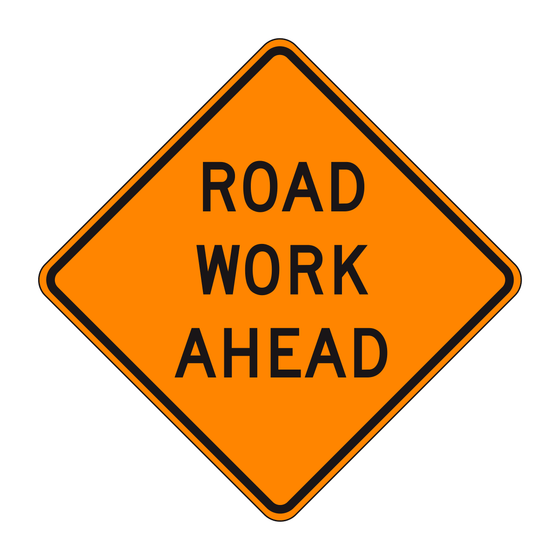
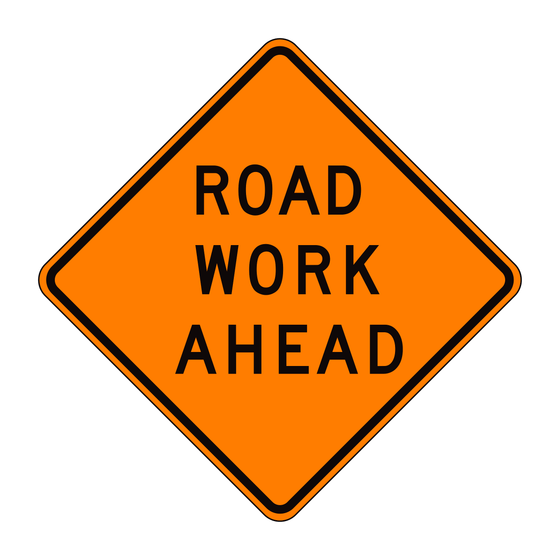
The W20 Series covers diamond-shaped fluorescent-orange warning signs used at the beginning of and throughout road work zones. These signs alert drivers to lane closures, road work ahead, flagger control, be-prepared-to-stop conditions, and changes in roadway geometry. The W20 Series is among the most frequently called-out sign series on California traffic control plans for utility construction, road maintenance, and public right-of-way work.
View Series W21W21 Series
11 signs
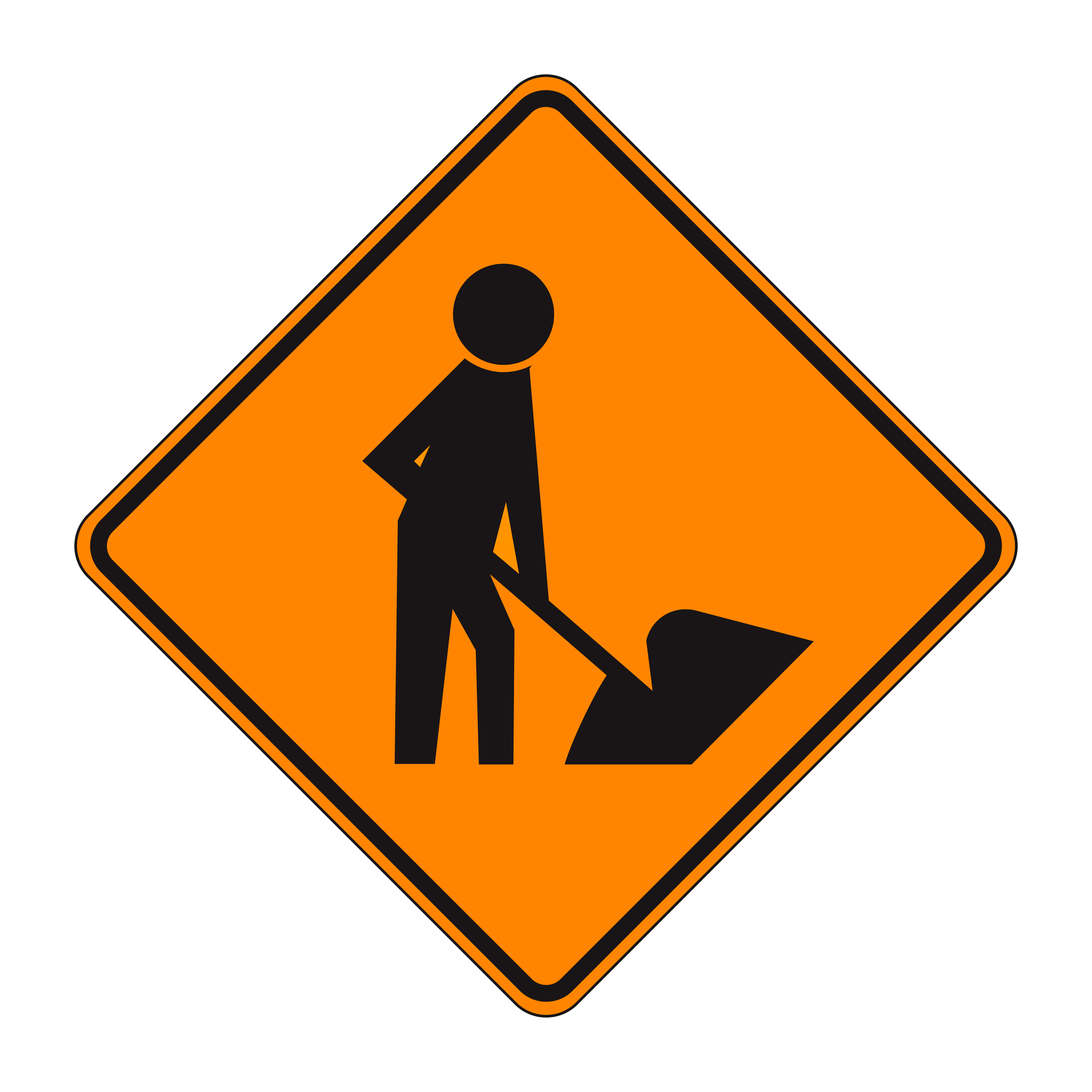
The W21 Series includes warning signs that alert drivers to workers, equipment operators, and utility crews in or near the traveled way. These orange diamond signs are used wherever workers are exposed to traffic — at active excavation, equipment staging, utility operations, and shoulder maintenance. WORKERS (W21-1), SHOULDER WORK (W21-5), SHOULDER CLOSED (W21-5a), and UTILITY WORK AHEAD (W21-7) are commonly combined with the W20 Series advance warning to give drivers adequate advance notice of human presence near the roadway.
View Series W3W3 Series
5 signs
The W3 Series covers warning signs that alert drivers to stopping and signaling conditions ahead. W3-4 (BE PREPARED TO STOP) is the most common W3 sign in temporary traffic control — used ahead of flagging stations, queues, and temporary traffic signals where drivers must be ready to stop. W3-3 (STOP AHEAD) is used where a stop sign or full stop is required before reaching the work area.
View Series W4W4 Series
2 signs
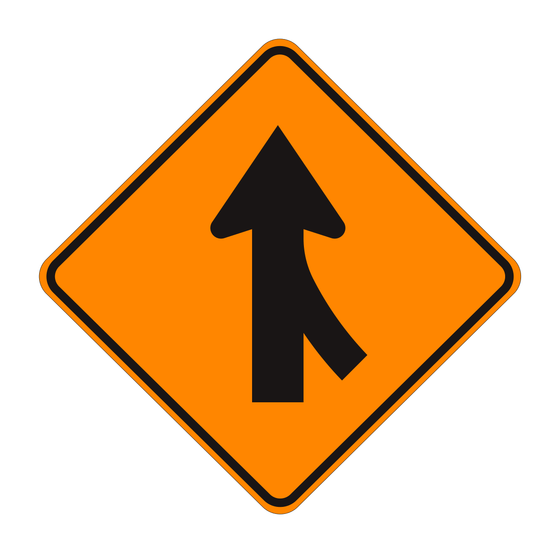
The W4 Series covers warning signs for merging lanes, added lanes, and lane-change conditions. In temporary traffic control, W4-2 (ADDED LANE) is used when a temporary lane is introduced — such as when a shoulder is opened as a travel lane or when a realigned lane configuration adds an approach. These signs help drivers anticipate a change in the number of available lanes before reaching the transition.
View Series W9W9 Series
3 signs
The W9 Series includes warning signs for lane-ending and divided-highway transitions. W9-2 (LANE ENDS) is widely used in California work zones at the downstream end of a lane reduction taper to reinforce the merge for drivers who missed the upstream W20-5 series advance warning. It is also used at permanent lane drops. W9 signs complement the W4 and W20-5 series in lane-closure sequences.
View Series G20G20 Series
4 signs
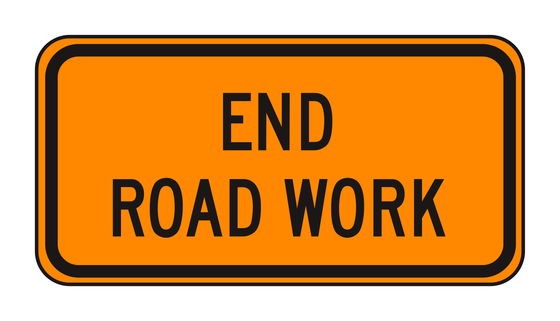
The G20 Series marks the downstream end of a temporary traffic control zone, signaling to drivers that normal roadway conditions have resumed and work zone speed limits and restrictions no longer apply. G20-1 (END ROAD WORK) and G20-2 (END CONSTRUCTION) are the standard terminal signs for California TCPs. They are placed at the downstream end of the termination area, just past the last channelizing device or transition.
View Series M4M4 Series
9 signs
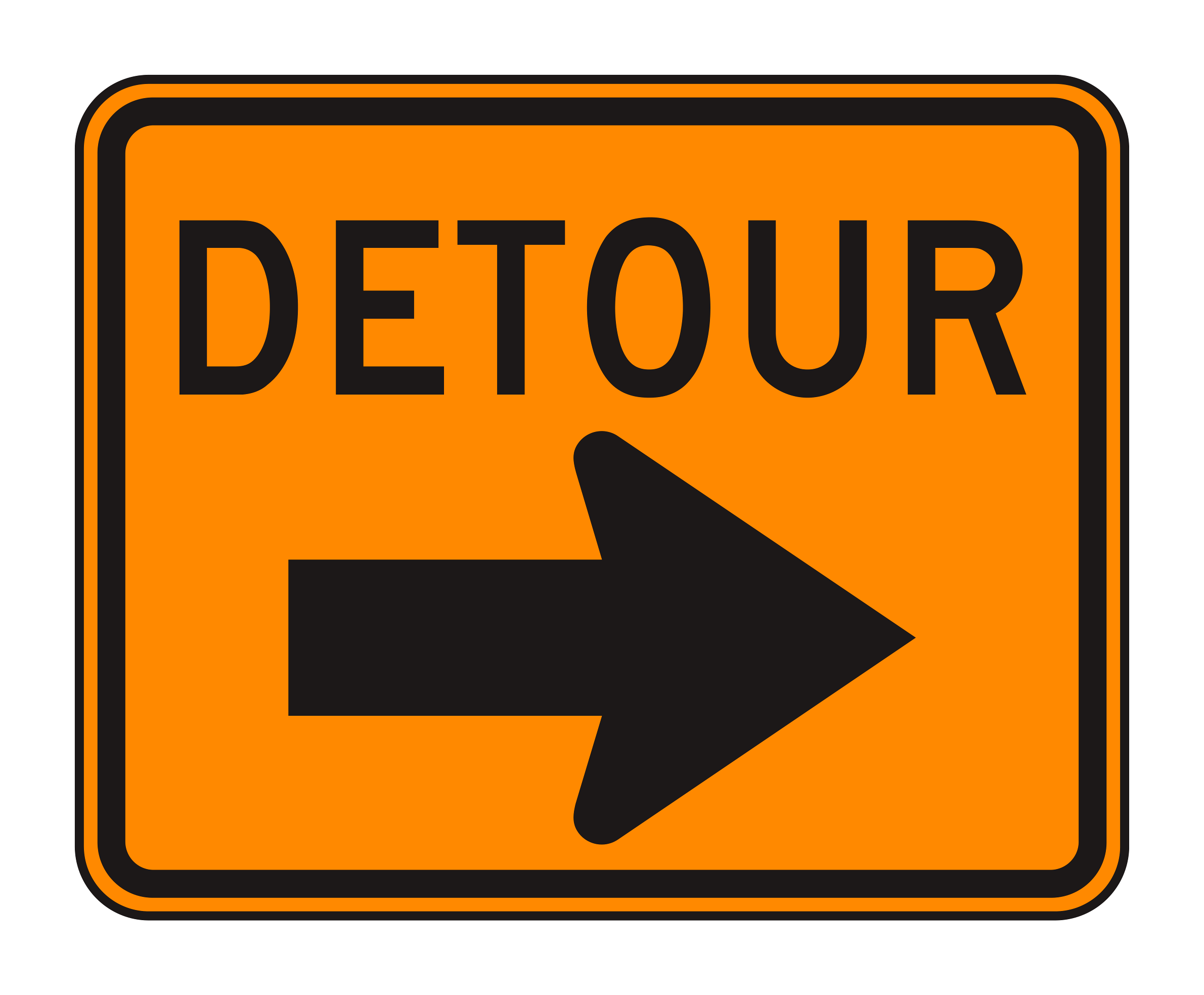
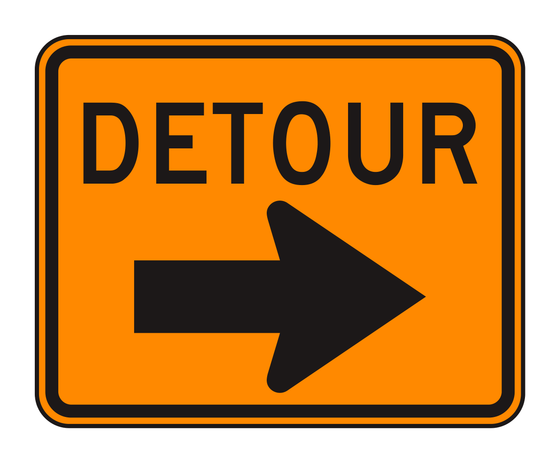
The M4 Series provides the directional detour markers used to guide vehicles — and in some cases pedestrians — around a road closure along an approved alternate route. M4-8 (DETOUR with arrow) marks each turn along a vehicle detour. M4-9 and M4-9a are advance detour markers with distance information. M4-9b provides a pedestrian-specific detour path for sidewalk and crosswalk closures. These signs use fluorescent orange backgrounds in California temporary traffic control contexts.
View Series R1R1 Series
7 signs
The R1 Series is the foundational right-of-way control series, covering STOP (R1-1) and YIELD (R1-2). These signs establish legal stop and yield obligations at intersections and access points. In temporary traffic control, R1 signs may appear at temporary intersections created by a detour, at flagging check-points where vehicles must stop before proceeding, or wherever a permanent signal has been knocked out and stop-control is required.
View Series R2R2 Series
2 signs
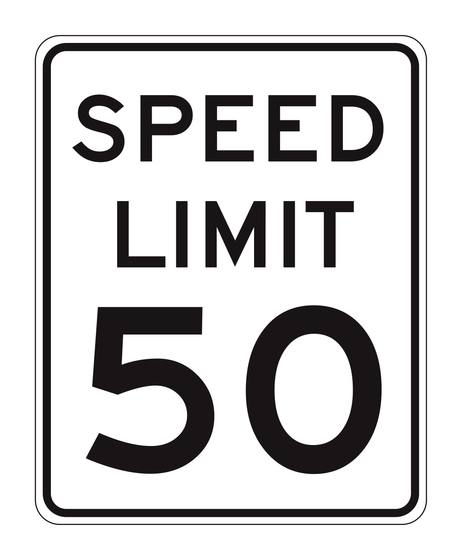
The R2 Series covers speed limit regulatory signs (R2-1) used to set the legally enforceable maximum speed on a roadway or within a zone. In California work zones, a reduced speed limit — such as 25 MPH in an active work zone — must be authorized by the agency with jurisdiction before it can be posted. Fines for speeding in California work zones are doubled when workers are present, increasing the significance of proper R2-1 sign placement and authorization.
View Series R5R5 Series
4 signs
The R5 Series covers regulatory signs that prohibit specific vehicle movements or restrict access. DO NOT ENTER (R5-1) and WRONG WAY (R5-2) are the most critical signs in this series for California work zones. They are used wherever a closed ramp, one-way lane, or wrong-way entry hazard exists — protecting drivers who might otherwise enter a work zone in the wrong direction.
View Series R6R6 Series
2 signs
The R6 Series includes ONE WAY signs used to establish and reinforce one-directional travel on a roadway. R6-1 (ONE WAY with left arrow) and R6-2 (ONE WAY with right arrow) are used in California work zones wherever a road or lane is reduced to one-way operation — including temporary contraflow lanes, crossovers, and channelized single-lane segments where head-on conflicts must be eliminated.
View Series R11R11 Series
6 signs
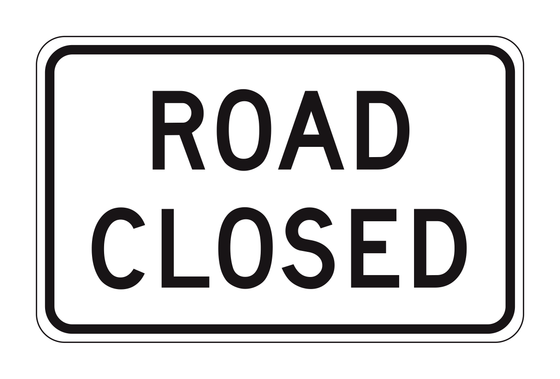
The R11 Series provides the regulatory signs used to legally close a roadway to all or some traffic. ROAD CLOSED (R11-2), ROAD CLOSED AHEAD (R11-3a), and ROAD CLOSED TO THRU TRAFFIC (R11-4) are the core closure signs for California permit-based closures, emergency closures, and planned construction or maintenance operations. These signs carry legal authority — displaying them without an authorizing permit or agency approval can expose the contractor to liability.
View Series R9R9 Series
12 signs
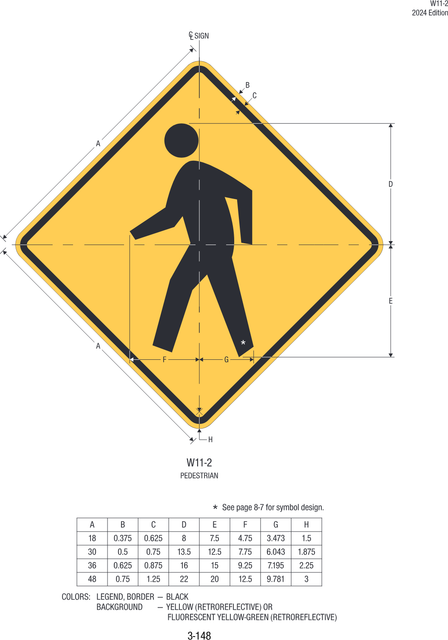
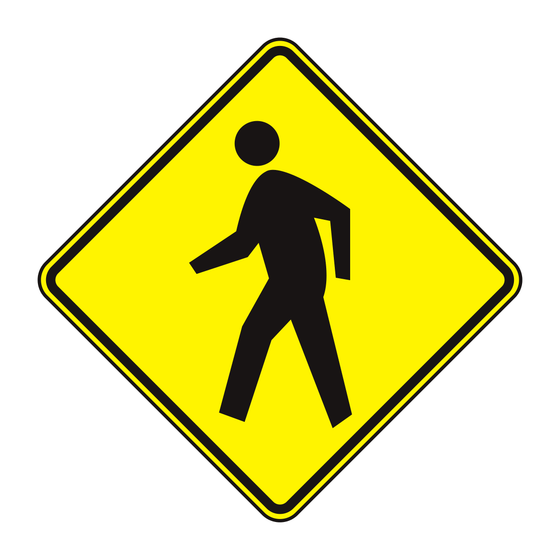
The R9 Series covers regulatory signs that direct and protect pedestrians and cyclists at crossings, sidewalk closures, and bike facilities. SIDEWALK CLOSED (R9-9), SIDEWALK CLOSED AHEAD (R9-8), PEDESTRIAN CROSSING (R9-10), and related signs are required in California whenever work activity closes or reroutes a sidewalk, crosswalk, or bicycle lane. These signs are part of the Temporary Pedestrian Access Route (TPAR) required on California TCPs that affect pedestrian pathways.
View Series R3R3 Series
8 signs
The R3 Series covers regulatory signs that control turning movements, lane-use requirements, restricted movements, and channelization at intersections and roadway segments. This series includes turn prohibitions (No Right Turn, No Left Turn, No U-Turn, No Turns), channelization instructions (Keep Right, Keep Left), turn-only mandates (Right Turn Only, Left Turn Only), and movement permissions. In California work zones, R3 signs appear wherever lane closures, median work, or roadway realignment changes which movements are permissible at an affected intersection or approach. They carry the same legal weight as all regulatory signs and must be authorized by the agency with jurisdiction over the roadway.
View Series OMOM Series
13 signs
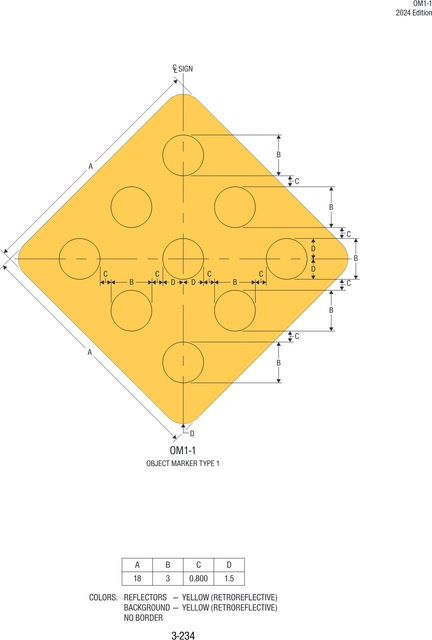
The OM Series covers object markers — retroreflective warning devices used to delineate physical obstructions in or adjacent to the traveled way. OM1-3 (Type 1 object marker), OM2-2V (Type 2 vertical object marker), and OM3-L (Type 3 object marker) are used in California TCPs to mark bridge ends, island noses, channelizing device faces, guardrail ends, and other fixed hazards that drivers could strike. Object markers provide critical nighttime delineation in work zones.
View SeriesCommonly Used California TTC Signs
Free Reference Downloads
Printable California traffic control sign reference sheets for field use, permit coordination, and TCP planning. Free, with no account or login required.
TTC Signs Quick Reference
A printable quick reference of California temporary traffic control signs — road work, lane and shoulder closures, flaggers, workers, and detours.
Road Closure Signs Reference
Road closure signs for field use — ROAD CLOSED, ROAD CLOSED AHEAD, and ROAD CLOSED TO THRU TRAFFIC, with closure and detour context.
TCP Sign Legend Reference
How a traffic control plan sign legend works — how signs are called out by code, description, and quantity, with a common legend format.
Built for California Work Zone Professionals
MUTCDSignChart.com is designed specifically for contractors, traffic control drafters, permit coordinators, and project managers working in California — especially in Los Angeles County, the City of Los Angeles, and Southern California. All sign references are based on the CA MUTCD 2026 (effective January 18, 2026) and California-specific temporary traffic control requirements.
California traffic control signs must be verified against the current CA MUTCD 2026 (effective January 18, 2026), Caltrans sign specifications, Standard Plans, project documents, and local agency requirements. This website is an educational reference and is not an official government publication. See official sources →
Need Traffic Control Signs for a Project?
MUTCDSignChart.com helps you identify traffic control signs. If you need to rent, purchase, or coordinate signs for a California public right-of-way project, contact Public Ready for temporary traffic control sign support, TCP sign legends, permit coordination, and project-ready sign packages.