MUTCD Sign ChartMUTCDSignChartA Public Ready Knowledge Resource

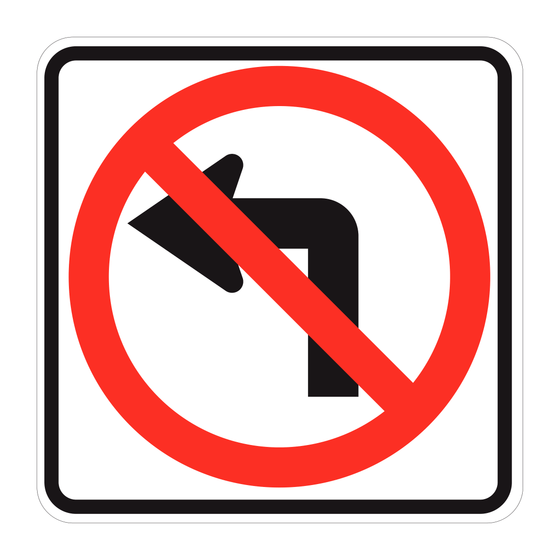
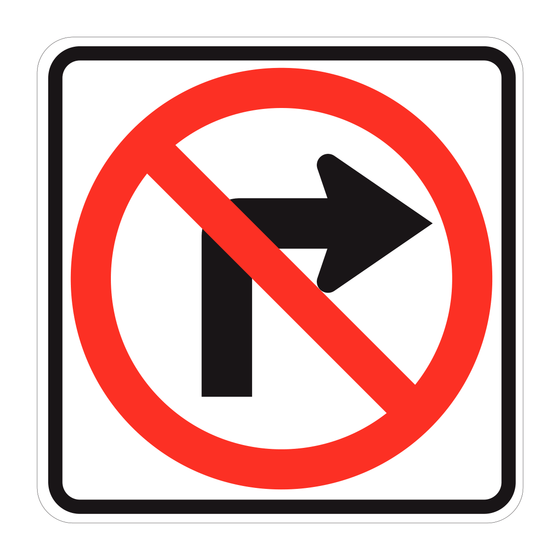
R3-1 No Right Turn

Prohibits a right turn at the intersection or location where the sign is posted, making it a traffic law violation to turn right.

Sign Name
No Right Turn
General Meaning
Prohibits a right turn at the intersection or location where the sign is posted, making it a traffic law violation to turn right.
MUTCD Code
R3-1
Typical Use
At the point where the regulation applies, per CA MUTCD Part 2B.
Sign Category
Regulatory Signs

Specifications

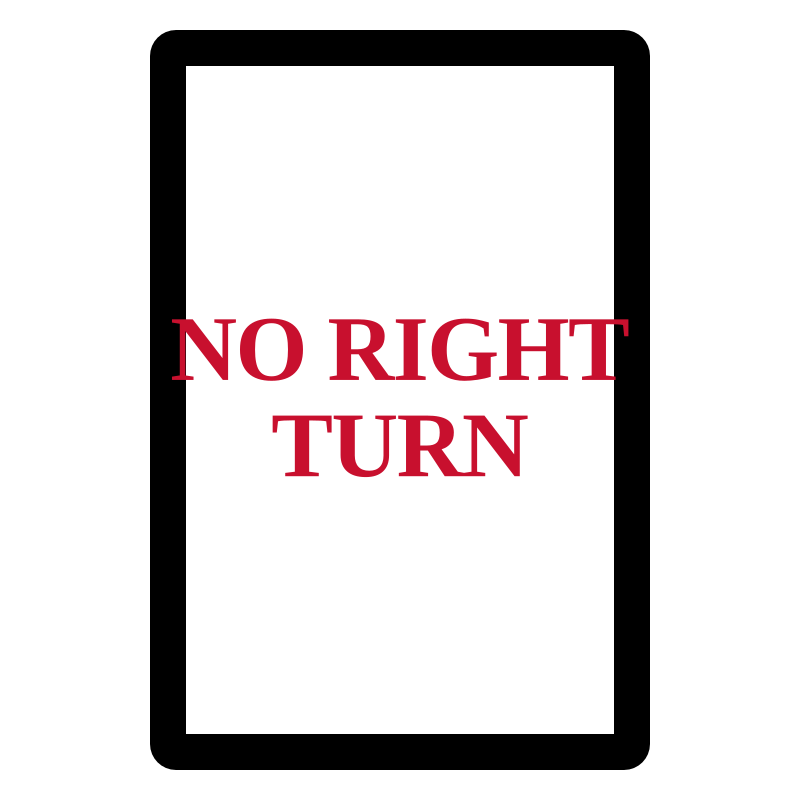
Standard Shape
Rectangle (Vertical)
Background Color
White
Legend / Symbol
Black legend
Border
Black
Reflectivity
High Intensity (for nighttime visibility)
Compliance
MUTCD / CA MUTCD

Standard Sizes (inches)

  • Conventional Rectangle (Vertical)24"–48" tall
  • Expressway Rectangle (Vertical)36"–60" tall
  • Freeway Rectangle (Vertical)48"–72" tall
View all standard sizes and options

Material / Application Notes

Prohibiting right turns at intersections affected by lane closures. Confirm placement and supplemental plaques against the applicable CA MUTCD standard.

View this sign on the Federal MUTCD (FHWA)

California Notes

California-specific application notes and adoptions may differ. Review California requirements where applicable.

Go to California Notes
R3-1 No Right Turn — official FHWA layout

What It Means / When This Sign Is Used

In the field, R3-1 No Right Turn is typically positioned at the advance warning area, ahead of the work. Common deployments include prohibiting right turns at intersections affected by lane closures; controlling turning movements at construction-zone approaches; temporary turn restrictions due to pavement work on receiving roads. Always confirm its size, retroreflective sheeting, spacing, and placement against the CA MUTCD 2026 and the reviewing agency before finalizing the traffic control plan.

Learn more about No Right Turn sign requirements

When & Where It's Used

  • Prohibiting right turns at intersections affected by lane closures
  • Controlling turning movements at construction-zone approaches
  • Temporary turn restrictions due to pavement work on receiving roads

Placement on a Traffic Control Plan

Where it sits
At the point where the regulation applies, per CA MUTCD Part 2B.
CA MUTCD reference
CA MUTCD Part 2B (Regulatory Signs)
Typical minimum size
Per CA MUTCD minimum for the roadway type

California / Field Use Notes

Used in California work zones where a right turn must be prohibited due to lane realignment, construction activity, or closure of the receiving road.

In Los Angeles, temporary regulatory changes (speed, one-way, turn or entry restrictions) generally involve LADOT review, and on state highways Caltrans District 7. Regulatory authority cannot be created by signing alone — confirm the change is authorized by the agency with jurisdiction over the roadway.

Common Plan Review Comments

  • Temporary regulatory control not warranted or conflicts with existing control.
  • Reduced speed limit posted without proper speed-setting authorization.
  • Wrong-way protection (DO NOT ENTER / WRONG WAY) missing at closed approaches.
  • Sign size not appropriate for the facility.

Confirm the turn prohibition is properly authorized and does not conflict with existing control. Public Ready reviews temporary turn restriction signing.

Educational reference only. This is not an official Caltrans, FHWA, or local agency publication and is not legal or engineering advice. Always verify sign selection, size, placement, spacing, and application against the current CA MUTCD 2026, Caltrans sign specifications, Standard Plans, project documents, and the reviewing agency’s requirements. Local jurisdictions may impose additional requirements, and final selection, placement, and dimensions may require engineering judgment or agency approval. Written against California MUTCD 2026 (effective January 18, 2026) and the Federal MUTCD 11th Edition. Official sources last verified June 2026.

Need to Rent or Purchase This Sign? Contact Public Ready.

Public Ready supports sign selection, project-ready sign packages, and equipment sourcing through qualified providers — with expert support built for compliance.